Gran Canaria sits in one of the most cetacean-rich stretches of Atlantic water in Europe. A permanent colony of short-finned pilot whales lives year-round off the south coast, bottlenose dolphins show up on nearly every departure, and the same waters occasionally draw sperm whales and up to 30 species in total. Unlike seasonal wildlife experiences elsewhere, there's no bad month to go.
What varies is the experience. A glass-hull catamaran from Puerto Rico feels very different from a silent, small-group electric boat with a marine biologist from Pasito Blanco. The sightings are similar—the experience around them isn’t. This guide covers departure points, timing, what to bring, and how to choose the right cruise so you can focus on the wildlife.
| Cruise type | What’s included | Duration | Experience focus | Price from |
|---|---|---|---|---|
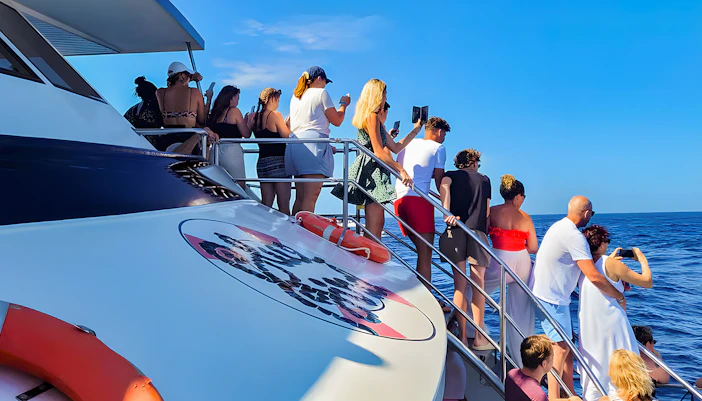
Glass-bottom sightseeing cruise | Whale & dolphin watching, glass-hull viewing galleries, multilingual crew, free return voucher if no sightings | ~2.5 hours | Easy, high-probability sightings with both deck and underwater views | €32 |
Whale watching + snorkeling cruise | Whale watching, glass-hull access, snorkel stop, slide, drinks | ~3.5 hours | Mixed experience: wildlife + swim + onboard activities | €37 |
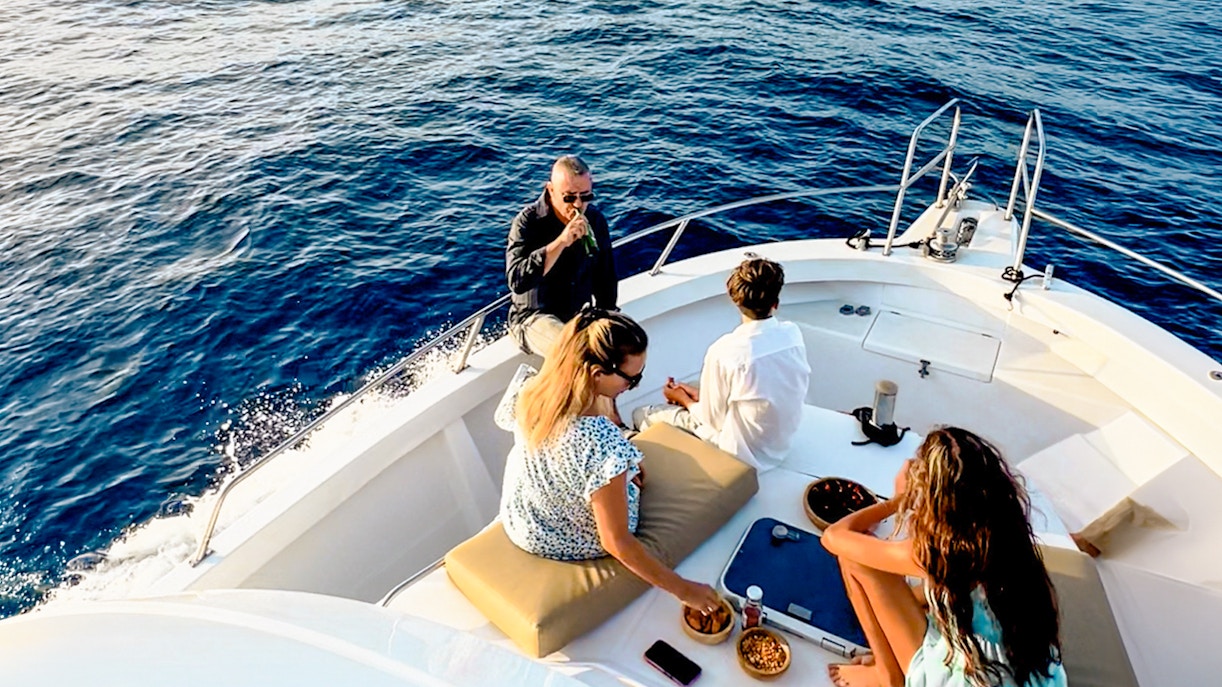
Small-group eco cruise (day/sunset) | Marine biologist onboard, small group of 10 guests, guided sightings, drinks, snacks/meal, silent electric sailing | 2.5–3 hours | Quieter, more immersive wildlife experience with expert insights | €75 |
Private whale watching cruise | Private boat reserved for you, expert guide, drinks & snacks, flexible timing (day/sunset), capacity of up to 10 guests | 2.5–3 hours | Exclusive, flexible, and closest-possible wildlife encounters | €750 |


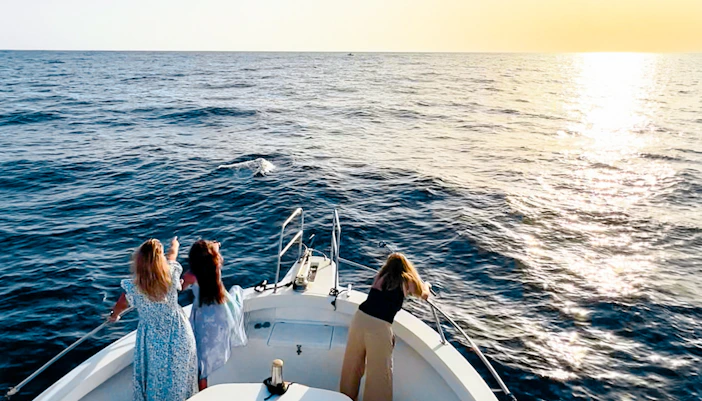
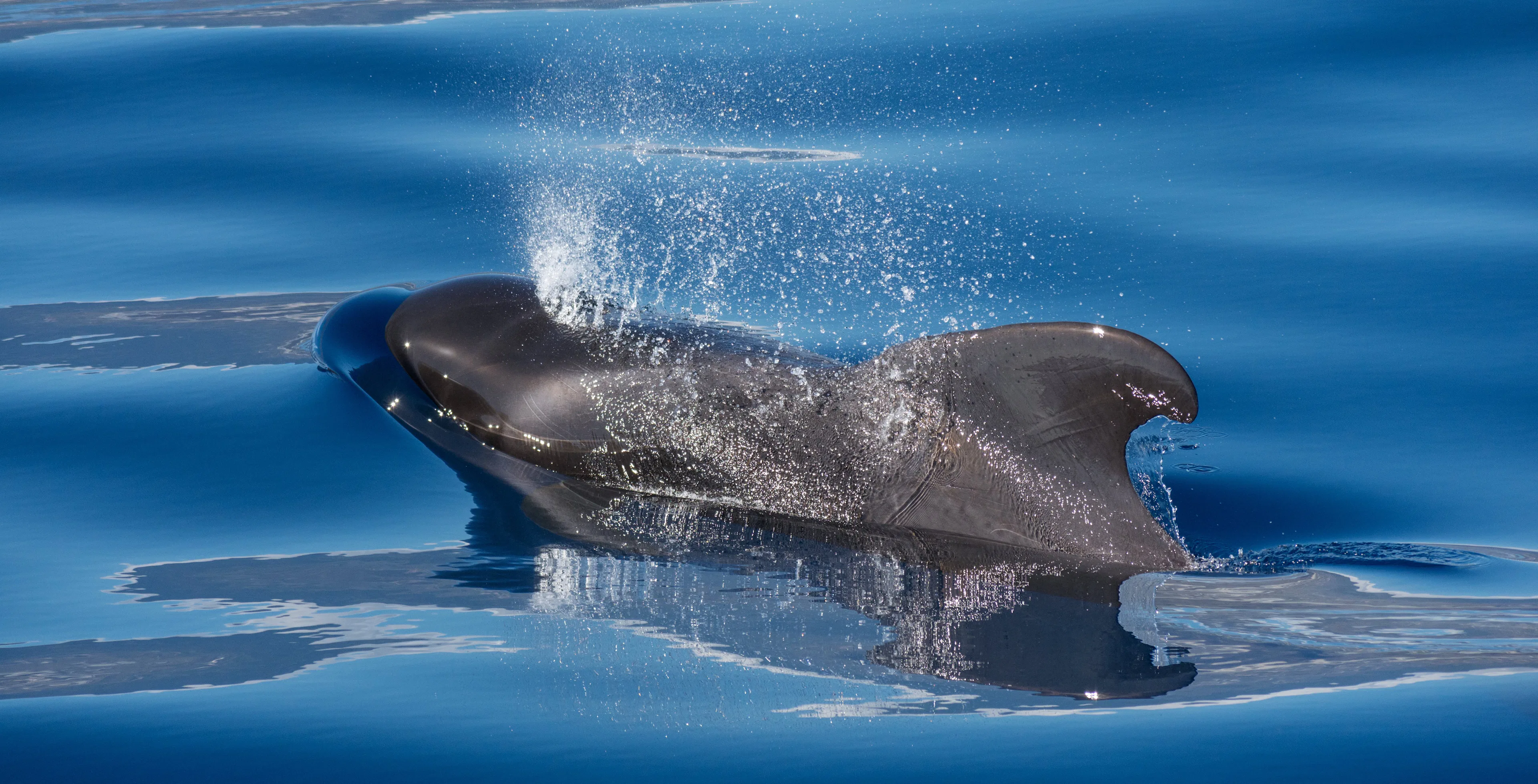
The most reliably spotted species in these waters, with a resident colony year-round off the south coast. Look for their rounded, melon-shaped heads surfacing in coordinated family groups, they’re highly social and often approach boats.
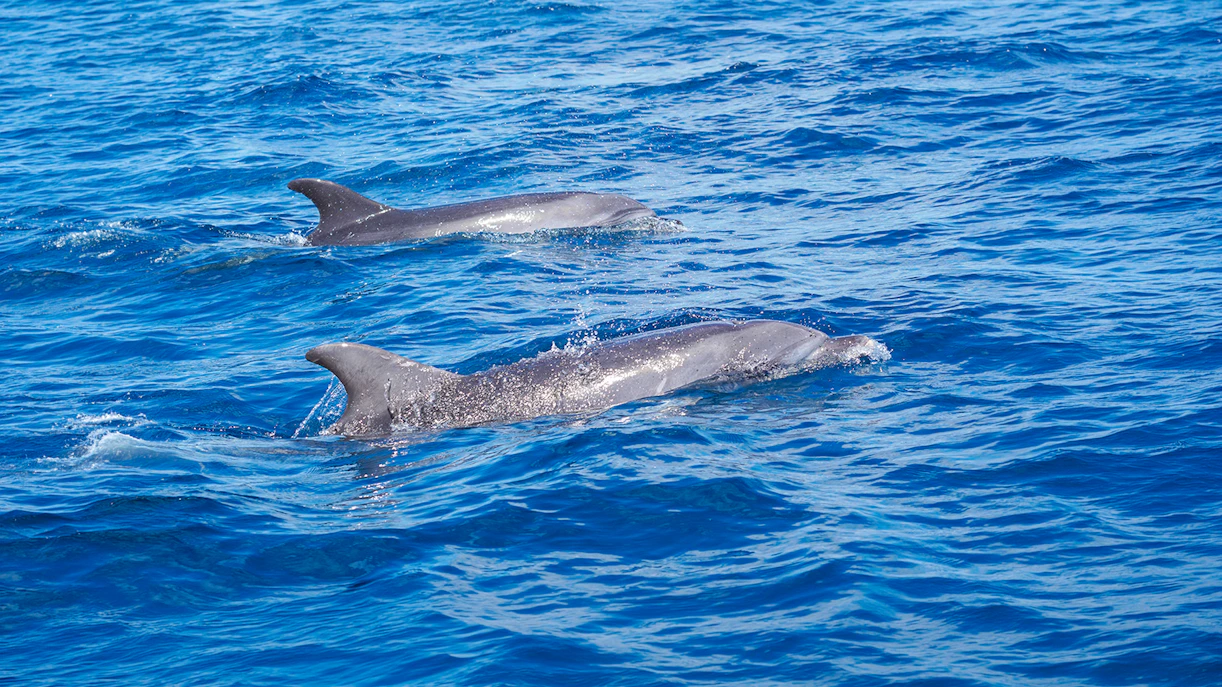
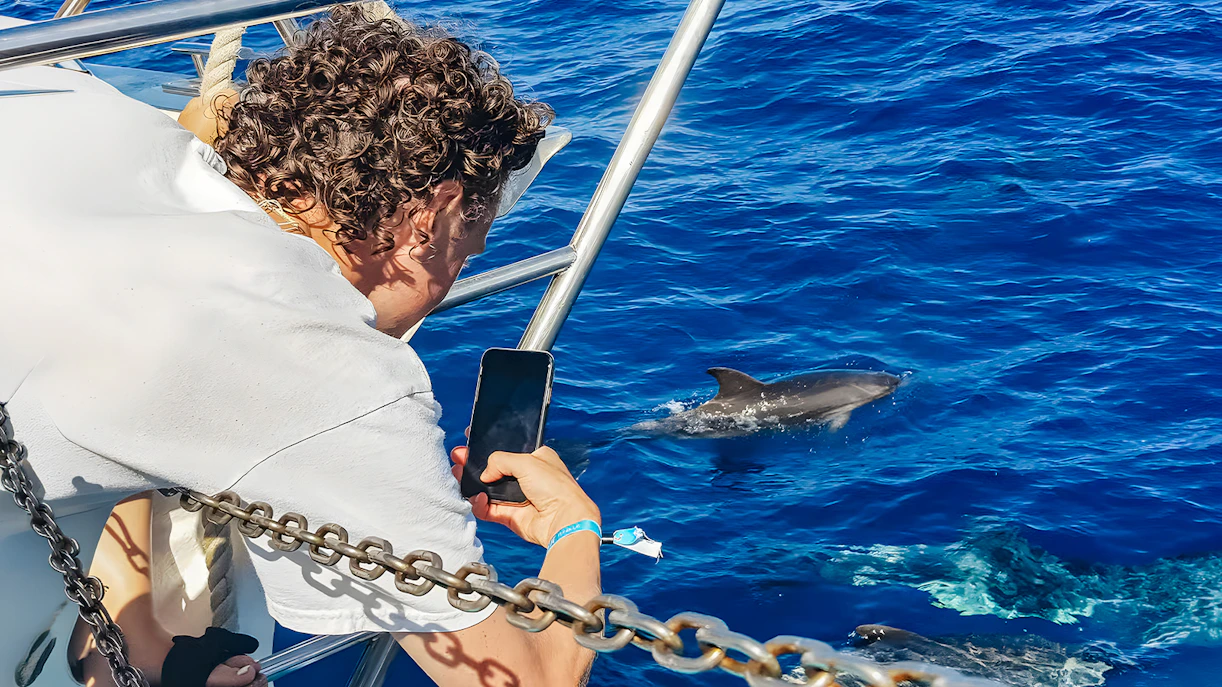
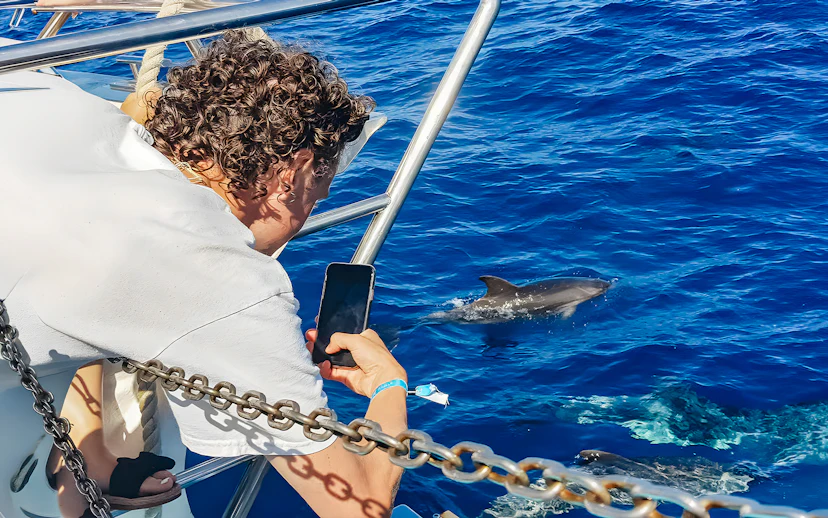
Seen on most departures. They ride the bow wave, breach alongside the boat, and come close enough for clear phone photos. Pods of around 10–15 are typical.
Often seen moving in fast, playful pods across open water. More active and unpredictable than bottlenose dolphins, they’re usually spotted further offshore.
The headline sighting, most likely in spring. Adults can reach up to 20 metres, watch for the angled blow, followed by a brief dorsal hump before a deep dive. Occasionally, the tail fluke lifts clear of the water.
Often spotted along the route, turtles sometimes within the first few minutes, and flying fish skimming the surface at speed. Not the main event, but a consistent bonus.
Whale watching in Gran Canaria runs year-round, thanks to a resident population of cetaceans along the island’s southwest coast. But while sightings are consistent, sea conditions, timing, and species activity can change your experience significantly.
💡 Pro tip: Time of day matters as much as season. Morning cruises (~9am) offer the calmest seas and best visibility for spotting fins at a distance. Sunset cruises trade that for atmosphere—golden light, a slower pace, and a more relaxed experience. Choose based on what you value more, sightings or vibe.
Yes, especially for sunset cruises, private tours, and small-group sailings. These cap at 8 passengers and fill weeks ahead in summer. Standard day cruises have more availability but are still worth booking ahead to secure your preferred time.
Tours run year-round and sightings happen in every season. Spring is the best chance for sperm whale sightings; winter concentrates common dolphins; summer brings humpback whales on their migration route. For calm seas and comfortable conditions, April to June and September to November are ideal.
Yes — glass-bottom cruises are particularly good for young children as the viewing floor keeps them engaged throughout. Small-group tours with a marine biologist on board are educational and calm. Morning departures tend to have gentler sea conditions, which helps with younger passengers.
Severe sea conditions may cancel departures at short notice. You'll be notified in advance and a refund or reschedule will be offered. Cancellations are relatively rare — tours run on approximately 8 out of every 10 days year-round.
Yes. Puerto Rico has paid parking close to the marina (approximately €5–10 per day). Pasito Blanco has parking on-site. Arrive at least 30 minutes before departure to allow time to park and walk to the embarkation point.
💡 Pro tip: Parking around Puerto Rico gets tight by mid-morning. Arrive early or factor buffer time, missing boarding here is more common than you’d think.
Peak season for variety.
Pilot whales and bottlenose dolphins are present as always, but spring is also when sperm whales push into these waters most reliably. If a sperm whale sighting is what you're after, this is your best window. Seas are generally calm, crowds are lower than summer, and the light is good for photography.
Most departures and the most crowds.
Every operator runs full schedules, more tour options are available, and the weather is almost guaranteed. The trade-off is that boats fill up faster and small-group and private tours book out well in advance. If you're travelling in summer, booking early isn't optional.
The underrated sweet spot.
Sea temperatures are still warm from summer, conditions are stable, and visitor numbers drop off sharply after August. Dolphin activity tends to be high, and you'll typically have more space on board than in peak season.
Quieter but still worthwhile.
The resident species don't go anywhere. What changes is that some operators reduce schedules or skip Sundays, and Atlantic swells can be choppier on exposed routes. Morning departures on calmer days still deliver strong sightings.
Fastest option, no parking needed. From Playa del Inglés: ~16 min, €25–35. From Las Palmas: ~45–50 min, €50–60. From the airport: ~40 min, €45–60. Ask the driver to reset the meter before departure.
Several tours include hotel pickup from Playa del Inglés, Maspalomas, Meloneras, San Agustín, and Mogán. Confirm your pickup zone at booking — not all resorts are covered by every tour.
🌞 Sunscreen & sunglasses: Strong Atlantic sun, even on cloudy days—polarised lenses help spot movement on the water
🧥 Light windproof layer: It gets breezy offshore, especially on morning and sunset cruises
📸 Camera/phone: A zoom lens helps, but most dolphin sightings are close enough for phones
💊 Seasickness medication: Take it before boarding if you’re prone—conditions can get choppy
🩱 Swimwear (if applicable): Needed for snorkeling/swim-stop cruises; gear is usually provided
💧 Water & light snacks: Some cruises include drinks, but it’s best to carry basics
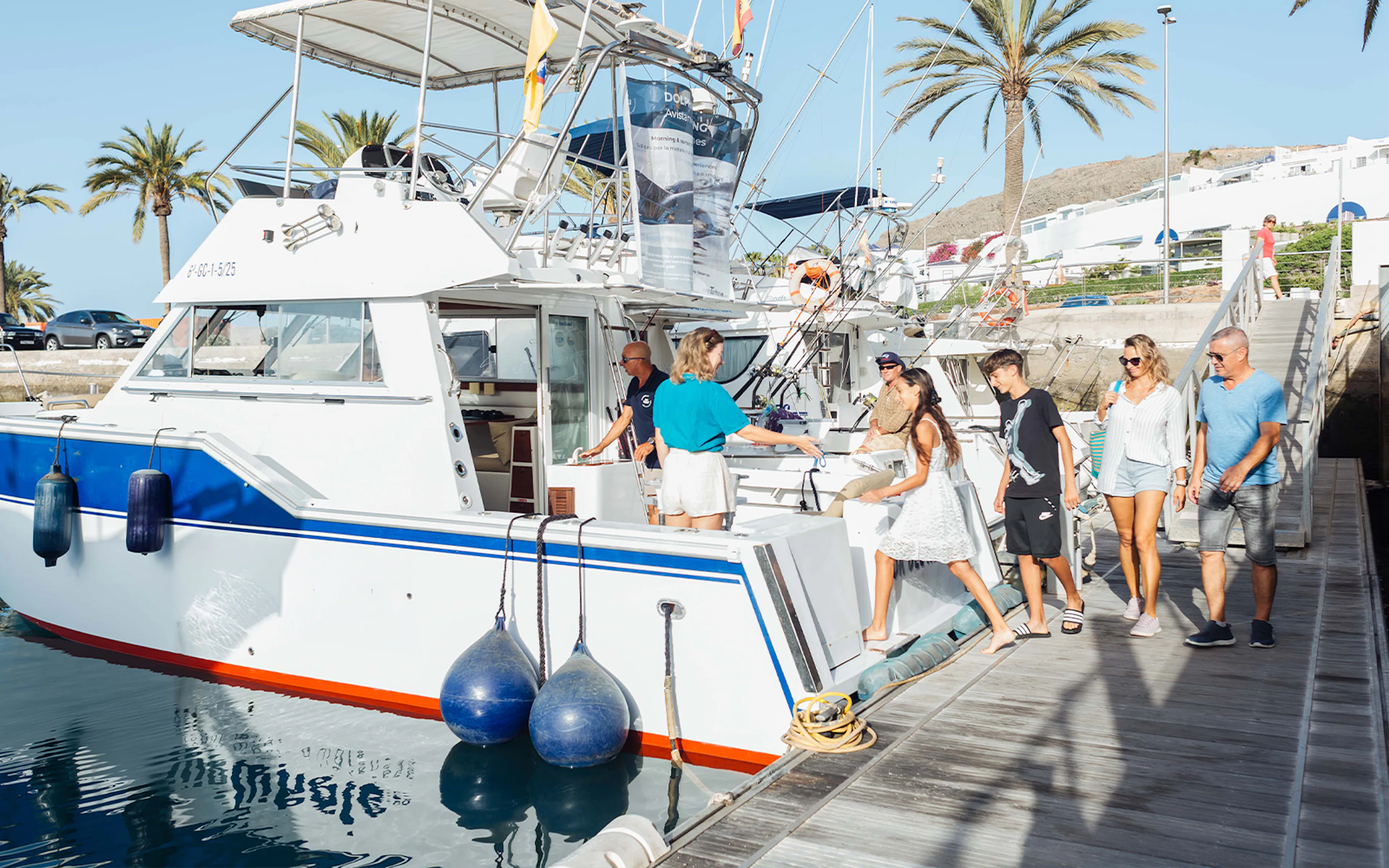
Arrive early: Boarding may start ~15 mins before, but marinas can be confusing—aim for 20–30 mins early so you’re not rushing to find the right pontoon.
Used by: Glass-bottom and snorkeling whale watching cruises
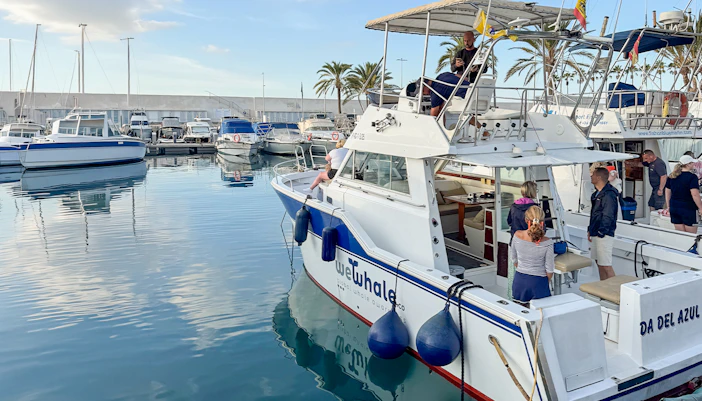
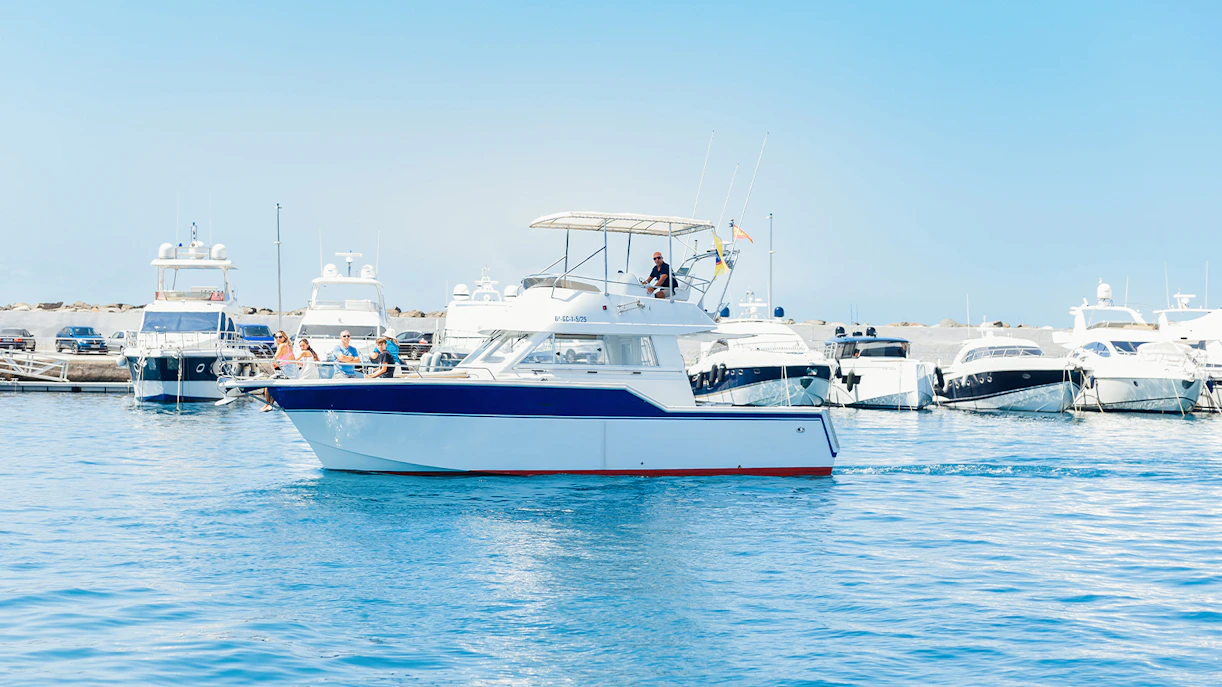
Located in Puerto Rico de Gran Canaria, this is one of the most common departure points for larger catamarans. Easy to access and close to major tourist areas, it’s the most convenient option if you’re staying in the south.
📍 Address: C. Puerto Base, 35130 Puerto Rico, Las Palmas, Spain
Used by: Small-group, sunset, and private whale watching cruises
A quieter, more exclusive marina near Maspalomas, typically used by smaller, premium or private boats. The setting is less crowded and closer to open water, which can mean a quicker start to sightings.
📍 Address: Varadero, C. Goleta 2, 35106 Pasito Blanco, Gran Canaria
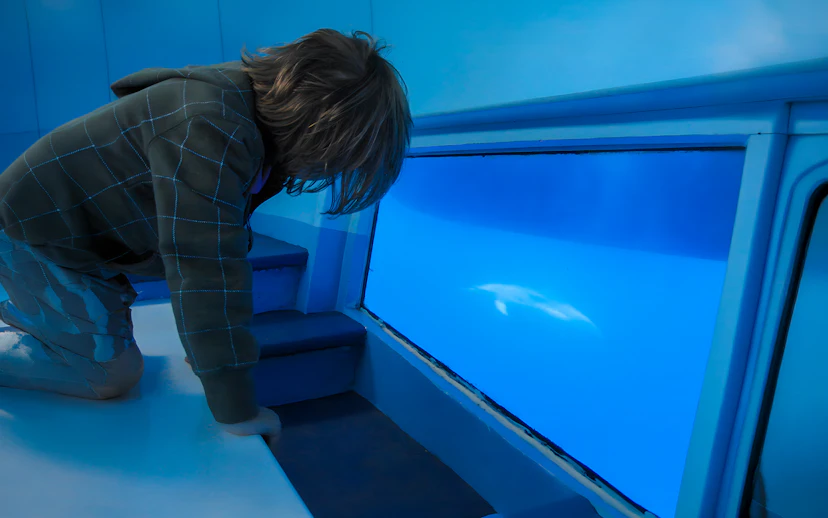
Most boats put you above the water. This one puts you beside the dolphins, through hull-level gallery windows built specifically for cetacean watching.
Inclusions #
2.5-hour catamaran cruise from Puerto Base
Glass-hull underwater viewing galleries
Multilingual crew in English, Spanish, German & French
Free return voucher if no cetaceans spotted
Exclusions #
Hotel transfers (available on request)
Food and drinks (available to purchase at onboard bar)
Gratuities
What to bring
What's not allowed
Accessibility
Additional information
3 ways to experience the Atlantic on 1 cruise: glass hull, snorkel stop, and a toboggan slide!
Inclusions #
3.5-hour catamaran cruise from Puerto Base
Glass-hull underwater viewing area
Dolphin and whale watching in the Atlantic
Live guide in English and Spanish
Snorkel mask per guest
Swim and snorkel stop near Taurito
Onboard toboggan slide
Soft drinks and water during swim stop
Exclusions #
Food and alcoholic drinks
Hotel transfers
What to bring
What's not allowed
Accessibility
Additional information
Private, electric-powered, conservation-backed, whale watching the way it should be done.
Inclusions #
3-hour private day cruise or 2.5-hour sunset cruise (as per option selected)
Hybrid electric vessel with dedicated crew
Expert cetacean guide in English, Spanish, and French
100% private experience for up to 10 guests
Water, soft drinks, beers, snacks, and fresh fruit
Exclusions #
What to bring
What's not allowed
Accessibility
Additional information
Dolphins by day, Atlantic gold by evening, a silent hybrid boat and a marine biologist make every sighting count.
Inclusions #
3-hour day cruise or 2.5-hour sunset cruise (as per option selected)
Hybrid electric vessel with silent engines
Marine biologist and expert crew
Live guide in English, Spanish, and French
Small group experience (up to 10 guests)
Organic drinks and beer
Fresh and dry fruits
Meal on board
Exclusions #
What to bring
What's not allowed
Accessibility
Additional information